

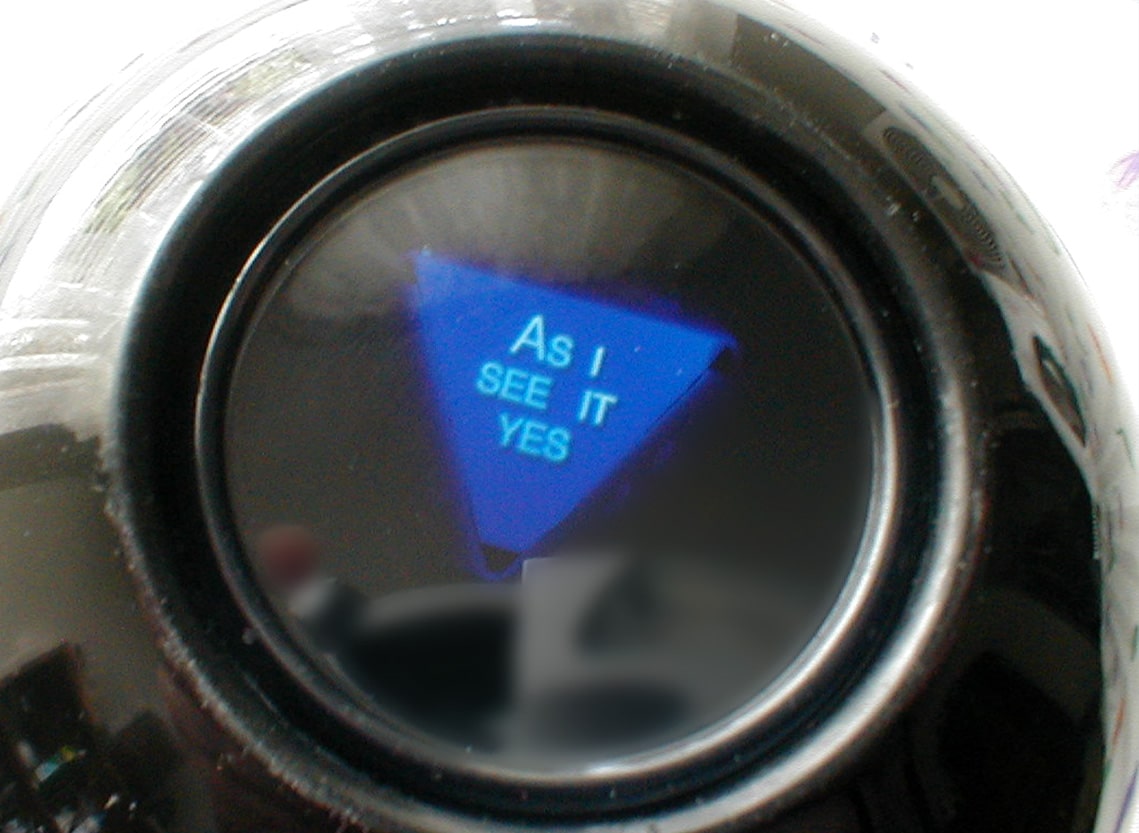
No one can predict the future. But, using my Magic 8 Ball, I am going to make three ecommerce trend projections for 2026.
Hello, Prompt-Based Site Search
Google has spent decades training us how to write proper keyword-based, long-tailed searches. Now, thanks to AI, everyone from Grandma to her grandson is becoming comfortable with prompts. Google has noticed; their search is looking more and more like Gemini. As we become comfortable with prompt-like AI searches online, customers will expect it on your website as well.
Internal site searches will need to perform more like an AI agent, rather than the traditional search with the predictive type-ahead we see today. Instead of customers typing in “little black…” and type-ahead suggesting “…dress”, customers will be asking, “Can you find a little black dress I could wear on a date next Friday night?”
If you are a retailer, you need your product data to be GOOD good, so you can provide an effective prompt-like search experience. You don’t want customers to write prompts that confuse your old query-based site search, get bad results, and look elsewhere. Also, will customers still want a CVS-receipt-long list of facets? When I ask ChatGPT for something, it asks me faceting questions, like, “Let me know if you want me to focus on a certain style of dress.” This is the online, helpful store associate experience retailers have been chasing. It is here.
This is not a chatbot. Sorry, chatbots, we abused you. You have become the digital version of customer service phone trees. If I have a problem, I am typing “TALK TO A PERSON” instead of trying to select from one of four predetermined answers that are irrelevant to me. This is how your customers will expect to discover products. Customers will expect search bars to behave like prompt boxes.
The Return of Voice Interactions
Digital assistants promised us a hands-free future, but ultimately delivered a speaker that is sometimes a timer for cookies in the oven. Alexa, Google, and Siri struggled to respond to questions outside simple yes-or-no decision trees, which is most human communication. Ultimately, Google Home’s Product team borrowed from Let Me Google That For You and defaulted to “I’ve sent a list of links to your phone.”
AI has brought conversational prompting and responses into vogue, which is perfect for voice interactions. If you are going to trust ChatGPT to shop, schedule, and search with a keyboard, why not use your voice? Digital assistants always felt like a long play, as many children can speak before they can type. Their first interactions with Google are with their voice, not their keyboard.
What does this mean for retailers? It makes agentic search optimization even more important. Integration with agents for ecommerce, such as ChatGPT or Gemini, will become critical and will start to be a bigger part of traditional SEO budgets. Customers may still hesitate to buy a rug or a pair of new jeans without seeing them first. Still, electronics, CPG, home hardware, cosmetics, and media are easy targets for a visual-free purchase experience. As we get more comfortable with AI’s natural conversational experience, it will feel more like shopping with J.A.R.V.I.S. than having Siri struggle to get your latte right.

Simple, Effective, Compelling Loyalty Programs
As marketplaces, from Amazon to Instacart, have grown in popularity, retailers have had to accept that they aren’t always their customers’ first point of contact. With AI, another new, bigger marketplace is coming. ChatGPT and Stripe are getting serious, and customers will soon be able to shop and purchase directly from an agent. Google won’t surrender its crown so easily, and I am sure they have a payments integration in the works. Copilot will be the Bing of AI shopping.
If you are a retailer, this is another hurdle between you and your customers. Shopping through agents prevents you from accessing customer data, building relationships, and sharing your margins. However, it opens the door to potential new customers. It will be more critical that you have a simple, compelling loyalty program. Without converting agentic shoppers into direct and brand-loyal customers, you will be competing on price with the rest of the internet.
So, how do you make a simple, compelling loyalty program effective? Make it simple. When you have seconds to make your loyalty pitch, you don’t want customers pulling out a calculator to add up their bonus points for buying Skittles after 3:30 PM on a full moon. Simple-to-understand programs with clear value, the kind that fits nicely on a product label or as a shipping insert, are key. Look for ways to reward loyal customers who make direct purchases. The hotel industry mastered this: book direct and get free WiFi. This allows you to build direct relationships with your customers. As a new layer of marketplaces emerges, built on existing marketplaces, a well-executed loyalty program can still keep your customers engaged.